


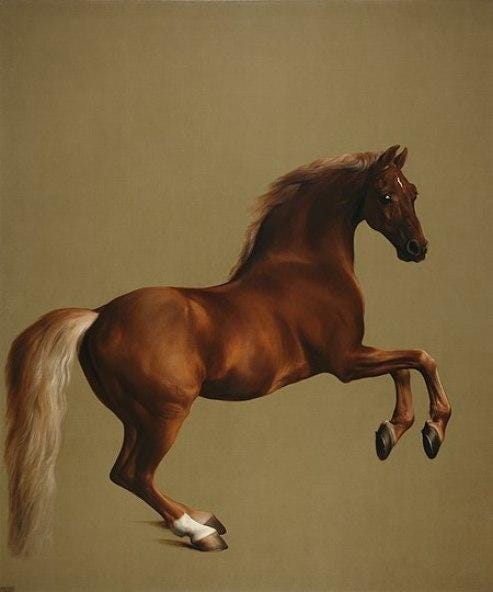
Wistljacket – George Stubbs 1762
George Stubbs was an English painter, best known for his paintings of horses. Self-trained, Stubbs learned his skills independently from other great artists of the 18th century, such as Reynolds and Gainsborough. Stubbs’ output includes historical paintings, but his greatest skill was painting animals. He painted some of the earliest known depictions of Thoroughbred racehorses. His most famous portrait, “Wistljacket,” the Marquess of Rockingham‘s racehorse, was acquired by the National Gallery in London for 11 million pounds.
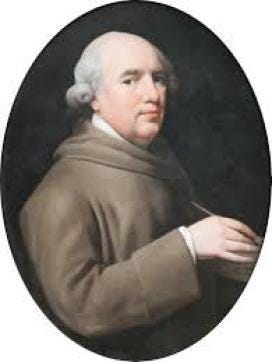
George Stubbs ARA, was born August 25th, 1724, & died– 10 July 10th, 1806
A Scientist As Well As An Artist
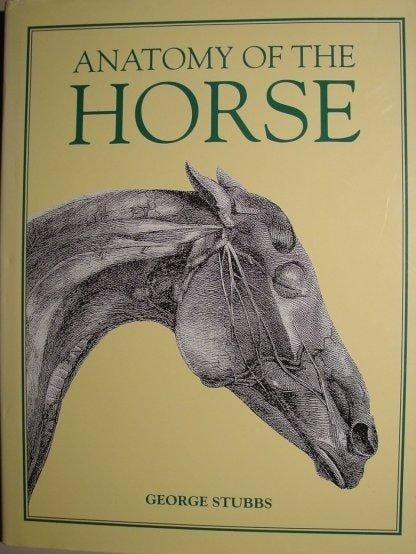
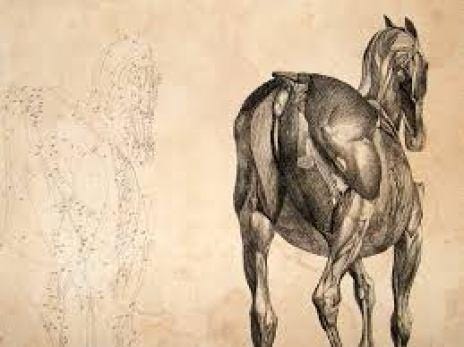
One of the most interesting things about Stubbs was his intricate knowledge of horse anatomy. Stubbs’s knowledge of equine physiology was unsurpassed by any painter; he had studied anatomy at York and, from 1756, he spent 18 months in Lincolnshire, where he carried out dissections and experiments on dead horses to understand the animal’s physiology better. He suspended the cadavers with block and tackle to be better able to sketch them in different positions. The careful notes and drawings he made during his studies were published in 1766 in The Anatomy of the Horse. Considered a groundbreaking scientific work, it’s still referenced today.
Version 1.0.0
First published in 1766, Stubbs’s work was based on numerous dissections, a practice far from generally accepted in his century. Stubbs’ horses, shown in this edition on 36 large plates, are memorable for their uncanny life-like quality, nobility, and extreme anatomical precision. In this systematic study, Stubbs depicts the horse in three positions ― side, front, and back. He first presents the skeleton alone in each of these three positions, then devotes five studies to each position, covering layers of muscles, fascia, ligaments, nerves, arteries, veins, glands, and cartilage.
The Age Of Romanticism
Stubbs was a proponent of the Romantic Movement, an artistic and intellectual movement that originated in Europe towards the end of the 18th century. The purpose of the movement was to emphasize subjectivity, imagination, and appreciation of nature in society and culture in response to the Age of Enlightenment and the Industrial Revolution.
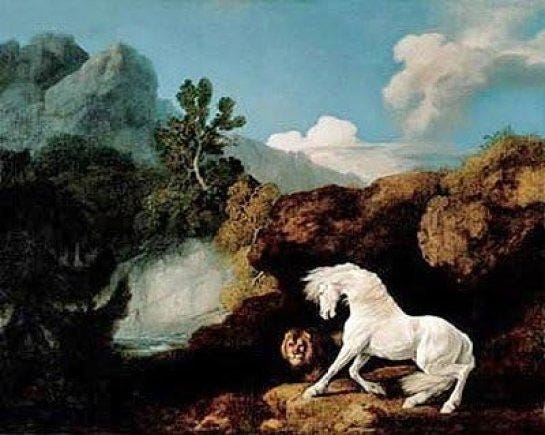
A Horse Frightened By A Lion
The painting “A Horse Frightened By A Lion” is a perfect example of Stubbs in the Age of Romanticism. Romantic artists often sought to capture the moods, feelings, and emotions of their subjects, using expressive compositions, vivid colors, and dramatic contrasts of light and dark. Nature was another important theme in Romantic art, with many artists exploring the beauty and power of the natural world.
Other Subjects
Although horses were Stubbs’s favorite subjects, he did other paintings as well, but most included animals in some way.
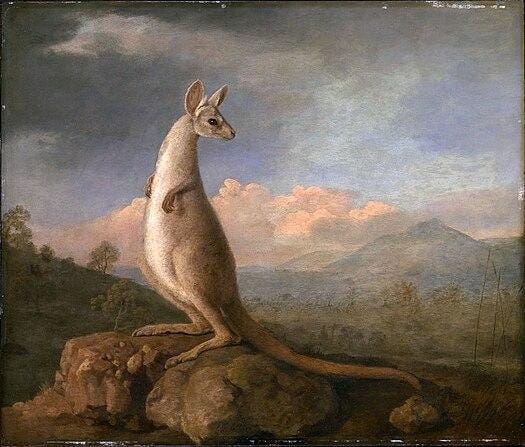
The Kongouro from New Holland, 1772
The Kongouro from New Holland is an oil painting depicting a kangaroo. It is the first painting of an Australian animal in Western art, along with Portrait of a Large Dog, a painting of a dingo.
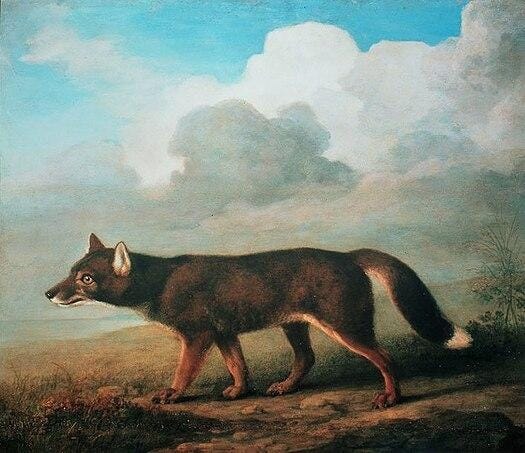
Portrait Of A Large Dog, 1772
Sometimes he even included people and exotic animals!
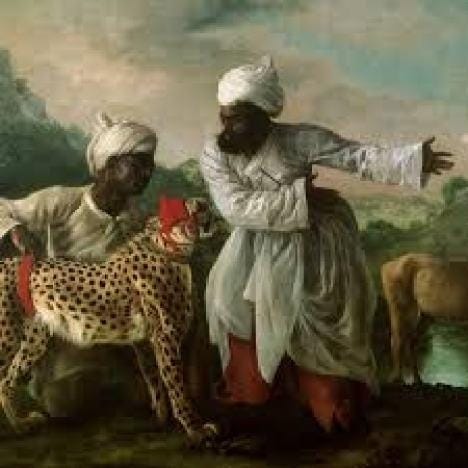
Cheetah and Stag with Two Indians, c.1765
Some Of My Favorites
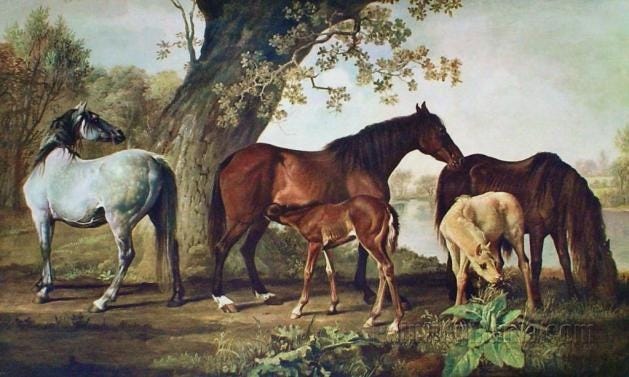
Mares and Foals 1724
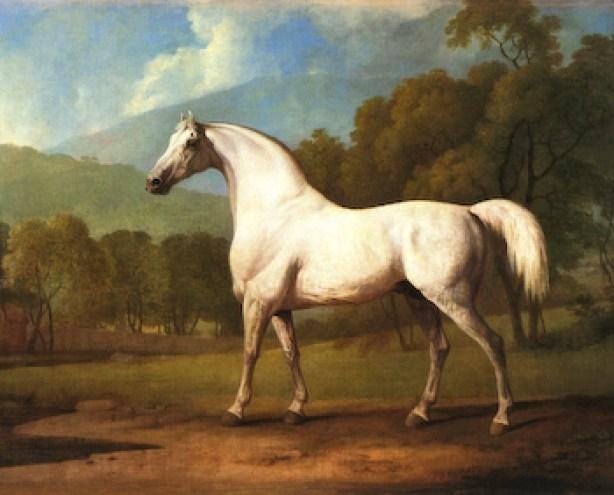
Mambrino 1790
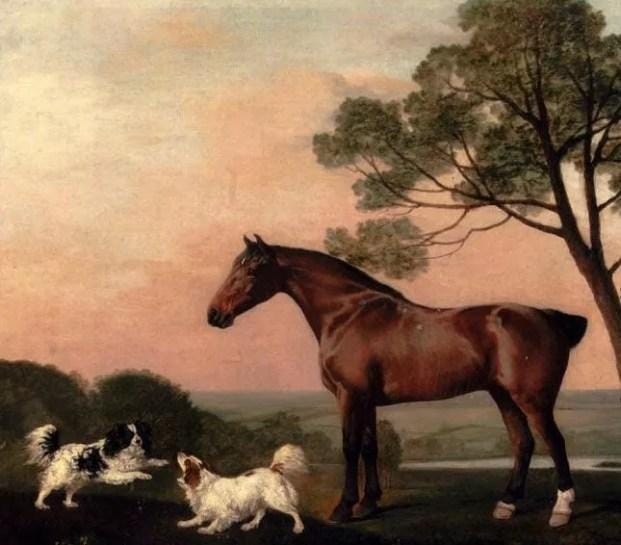
The Hunter And Two Dogs
There are so many wonderful paintings by George Stubbs to be explored!
Who is your favorite equine artist?

Rebecca & Janet Winters