Skiijoring did not begin as spectacle.
The word itself comes from the Norwegian skikjøring, meaning “ski driving.” In its earliest form, it was practical. In snowy Scandinavian countries, skiers were pulled across frozen terrain by reindeer, dogs, and eventually horses. It was transportation before it was competition.
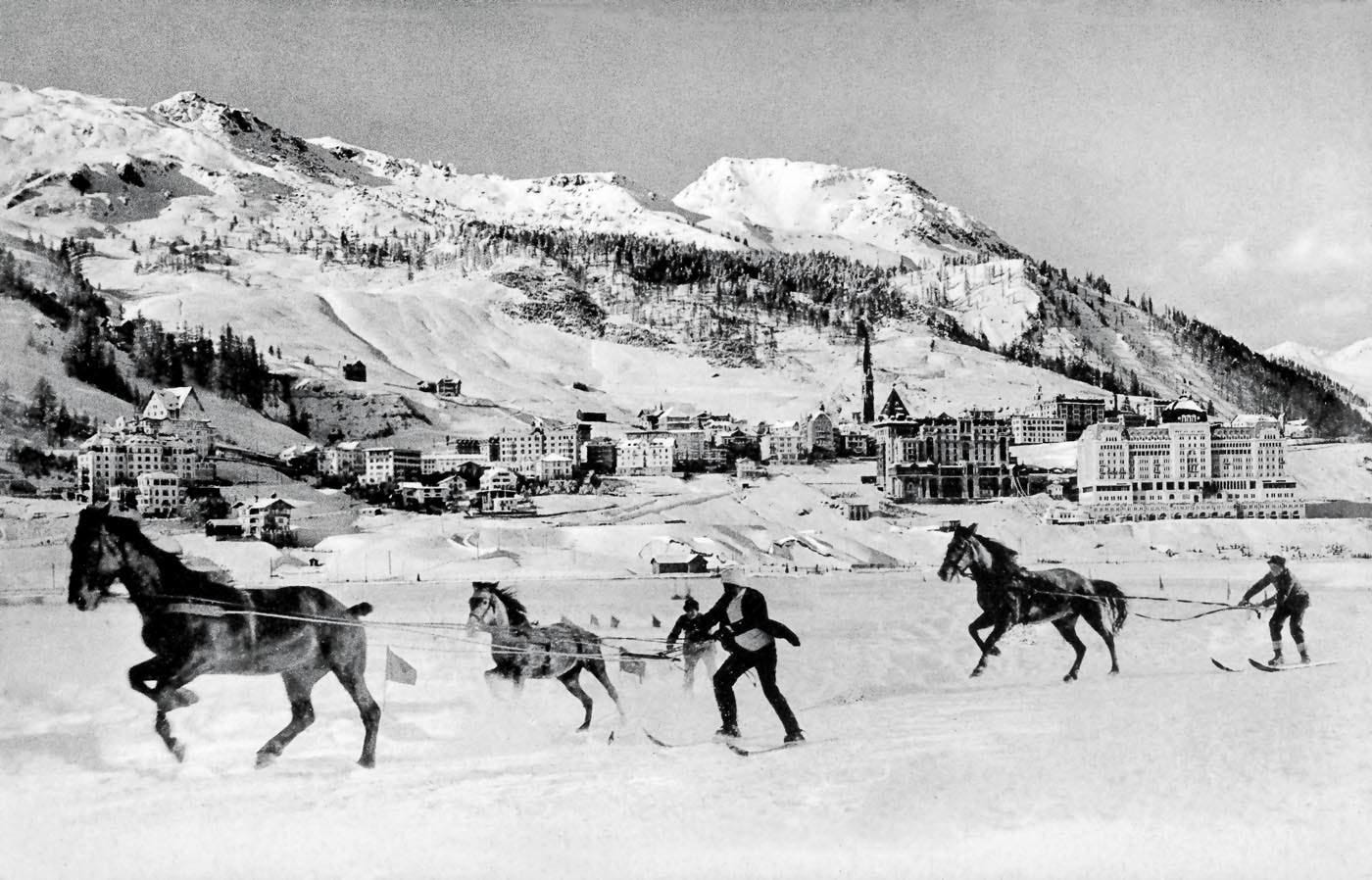
By the late 19th and early 20th centuries, skiijoring had evolved into competition and even appeared as a demonstration event at the 1928 Winter Olympics in St. Moritz. Horses pulling skiers across a frozen lake were no longer just practical…they were thrilling!
When skiijoring made its way to North America, it changed.
The American West reshaped it. Ranch horses replaced carriage horses. Main streets and snow-packed tracks replaced frozen fjords. Western tack, cowboy hats, and speed became defining features. What emerged was something uniquely American: part rodeo, part ski race, entirely winter.
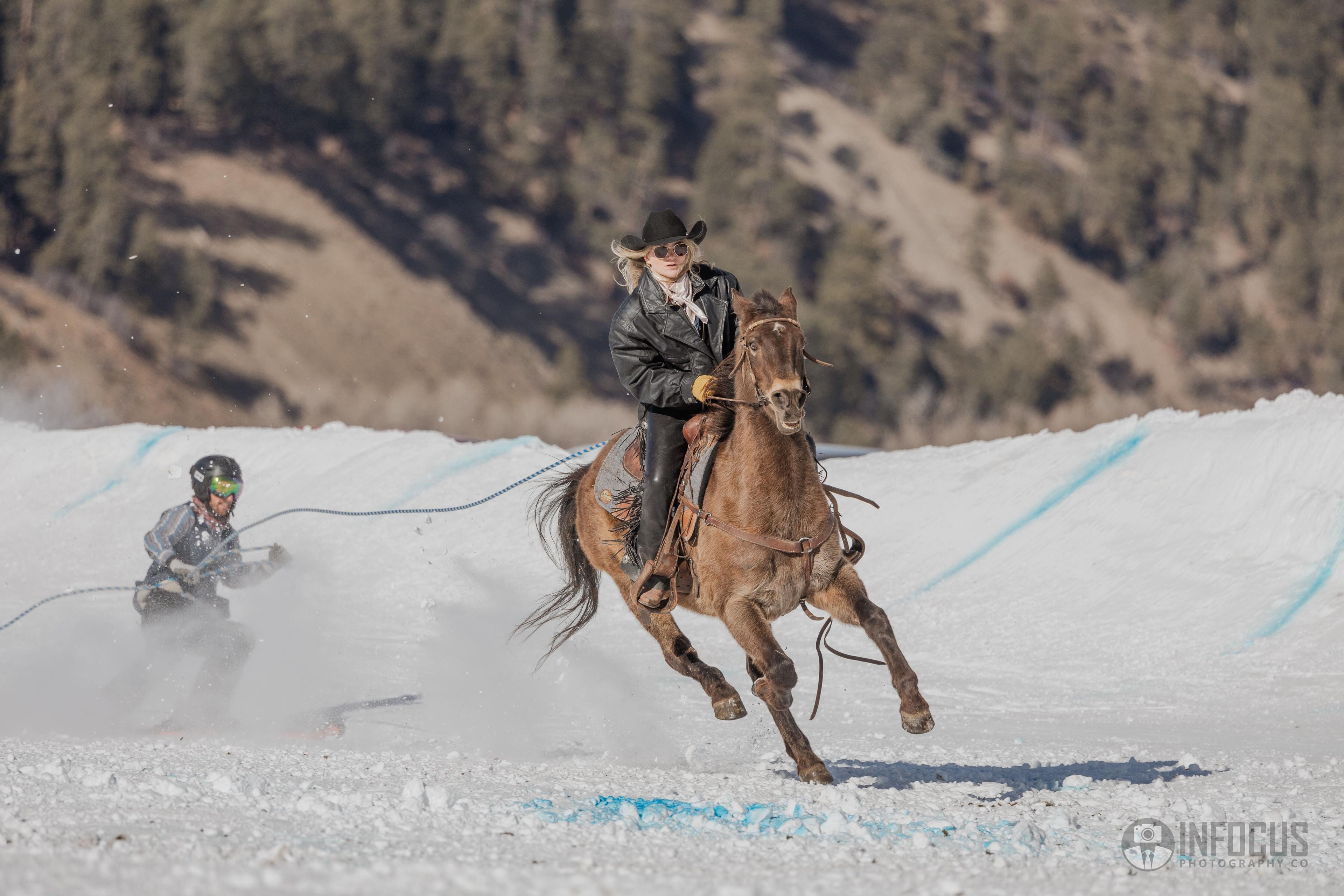
Today’s skiijoring reflects both histories. It carries echoes of its Nordic beginnings while operating as a distinctly American equestrian sport. It rests on the same foundations that built it over a century ago: horsepower, balance, winter, and nerve.
And while Montana and Colorado may have helped popularize modern American skiijoring, they are far from the whole story. The modern landscape of skiijoring stretches much farther than its best-known towns.
A National Circuit Built on Local Traditions
Today, skiijoring events span the country, loosely connected through organizations like Skijor USA, which serves as a central hub for races throughout the winter season.
Rather than a single formal league, skiijoring in the U.S. operates as a constellation of independently run events. Each reflects its own landscape, horse culture, and community.
In the Mountain West, skiijoring feels raw and fast. In the Midwest and New England, events lean into festival energy. In the Pacific Northwest, the sport continues to expand.
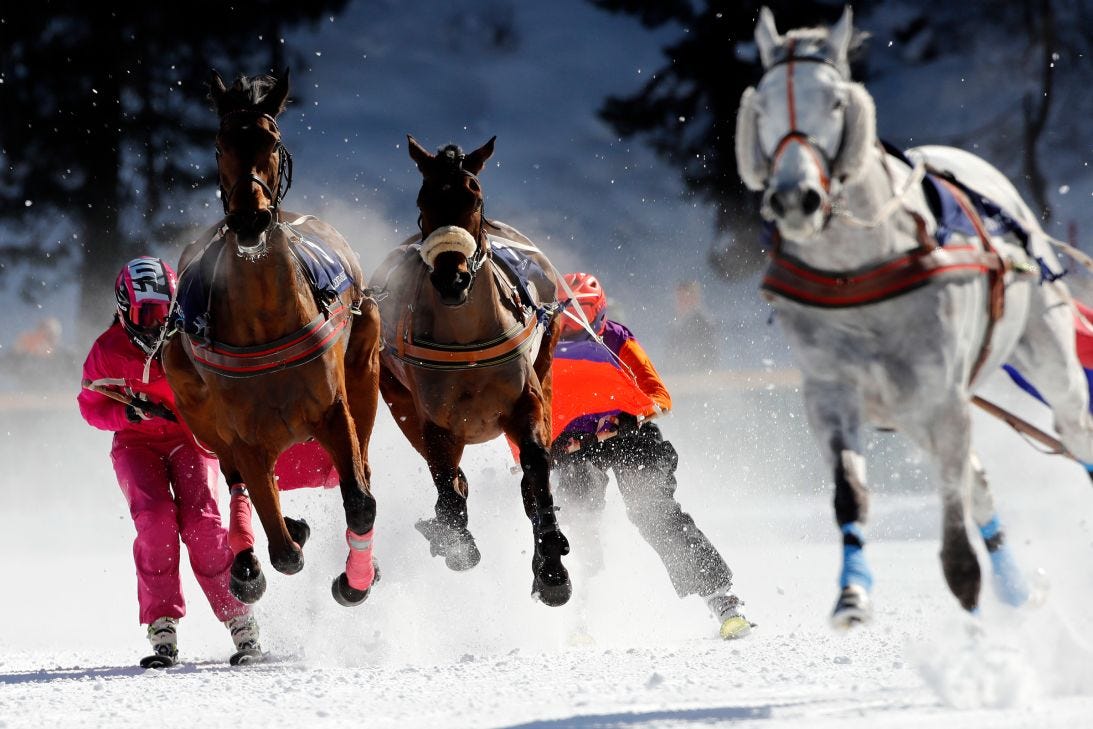
Skiijoring Events Across the United States
Each winter, dozens of events appear on the calendar. A few notable stops across different regions include:
Pacific Northwest
Chewelah, WA, Feb. 28 & Mar. 1 - One of Washington’s growing skiijoring events, drawing riders, skiers, and spectators from across the region.
Mountain West
Leadville, CO, Mar. 7 & 8 - One of the oldest skiijoring events in the country, held at elevation with a long-standing local following.
Grand Lake, CO, Feb 28 & Mar. 1 - A classic Colorado stop that blends small-town winter culture with serious competition.
Salt Lake City, UT Feb. 27 & 28 - An urban-adjacent event that brings skiijoring into a broader spotlight.
Upper Midwest
Canterbury Park, MT, Feb. 21 & 22 - A festival-style event that introduces skiijoring to new audiences while maintaining strong horsemanship at its core.
New England
Waterville Valley, NH, Feb. 15 - A reminder that skiijoring is not just a Western sport, but one that adapts well to New England winter traditions.
Skowhegan, ME, Feb. 21 - An East Coast expression of the sport rooted in community and winter resilience.
Taken together, these events show a discipline that is quietly nationwide. Different accents, different horses, different snow, but the same core requirements: bravery, partnership, and speed.
Skiijor Chic: When Winter Horse Sport Meets the Red Carpet
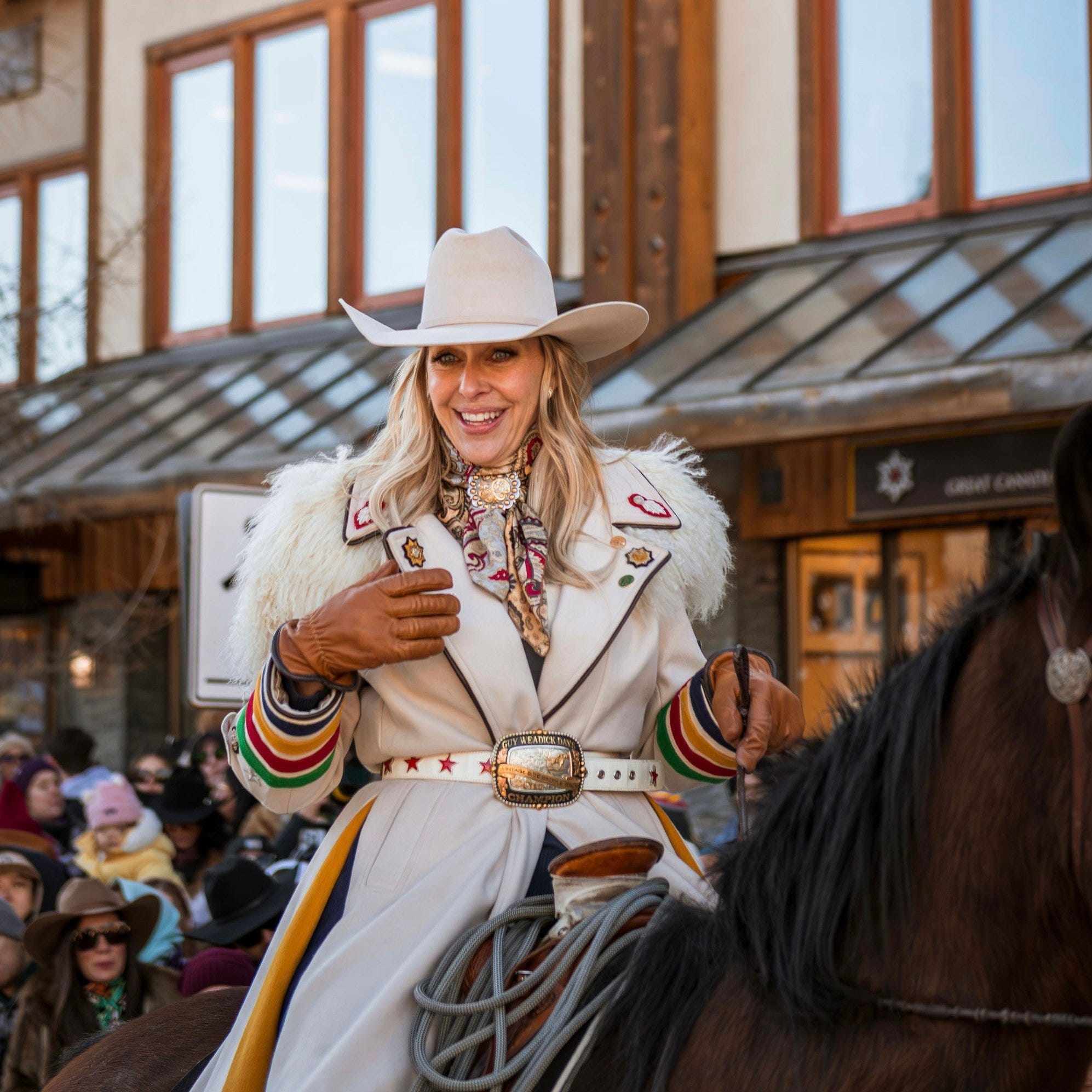
Spend time along a skiijoring rail, and you will notice something else happening between heats. Layers of shearling and flannel. Felt cowboy hats beside knit beanies. Denim dusted with snow. Belt buckles worn over insulated bibs. Mirrored ski goggles resting on Western collars.
What started as pure practicality has evolved into something recognizable enough to earn its own name: skiijor chic.
And in some places, it has gone a step further.
Certain events on the national calendar, including stops affiliated with Skijor USA, have embraced the cultural crossover through runway-style showcases and red-carpet moments. Spectators and competitors alike step forward to display their winter-meets-Western style, sometimes even judged in friendly competition for best-dressed honors.
Skiijor chic is not costume. It is what happens when working horse culture collides with mountain winter gear, and neither side feels the need to change. Waxed canvas next to down insulation. Cowboy boots planted in snowbanks beside insulated muck boots.
The aesthetic works because it is rooted in function. People dress for wind, snow, and long hours outdoors. The fact that it photographs beautifully is almost accidental.
In a sport built on partnership and nerve, the style that surrounds it carries the same confidence. It says you belong here. Whether you are holding a tow rope, sitting in the saddle, or standing along the rail with a thermos in hand.
A Winter Sport With Staying Power
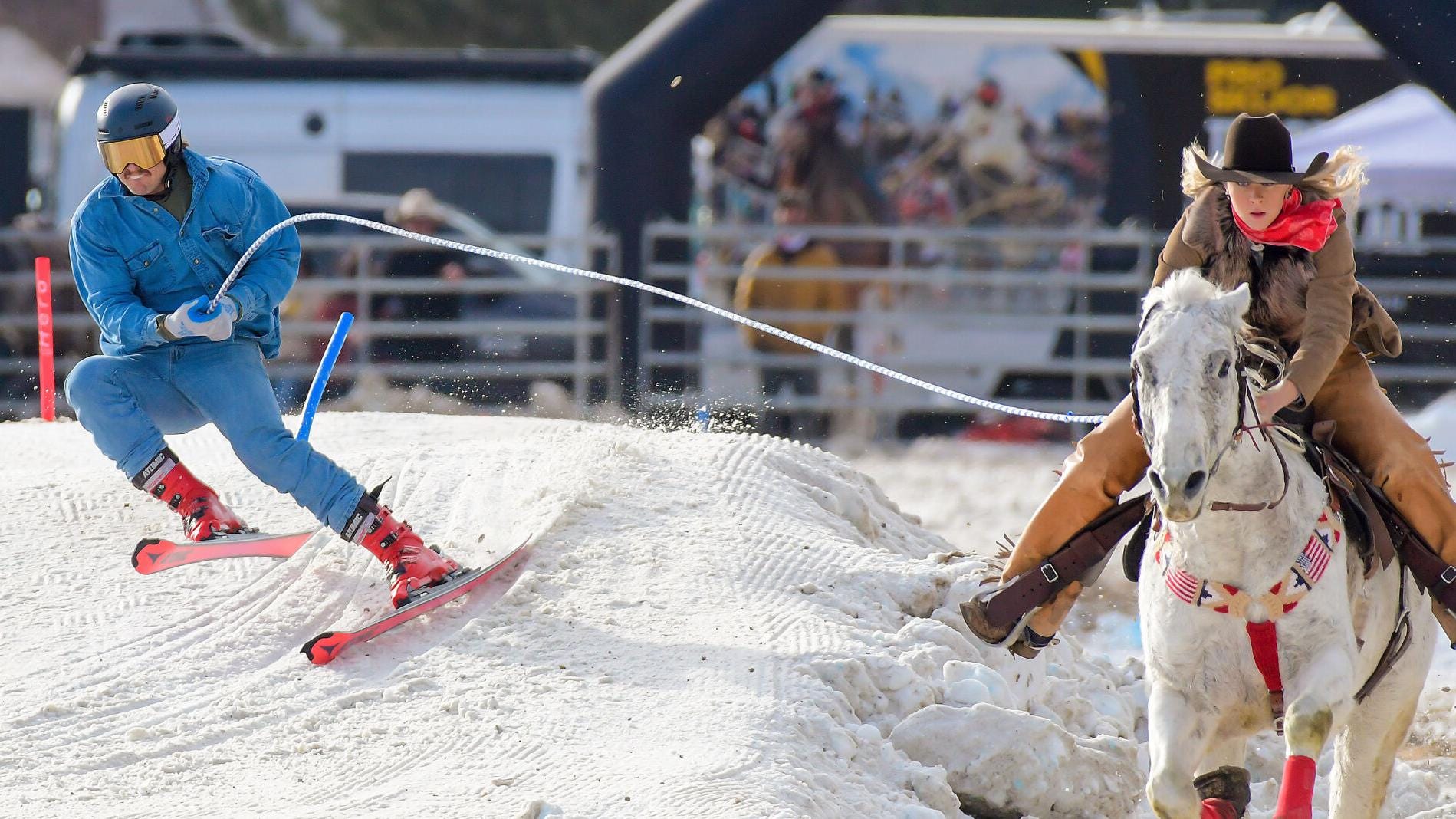
What makes skiijoring compelling is its honesty. It exists where winter is real, and horses are part of daily life. It asks participants to meet the season on its own terms.
As more communities embrace winter events that celebrate place, partnership, and grit, skiijoring continues to find new ground. Not as a trend, but as a living, working horse sport.
For those willing to stand in the cold and watch closely, skiijoring offers something rare: a winter equestrian sport that feels immediate, physical, and real. It is fast, demanding, and built on partnership, not pageantry. In a season when many horse disciplines slow down, skiijoring reminds us that horsemanship does not hibernate.
Pretty Fabulous!