

When a carriage horse collapsed on a Manhattan street, the images sparked outrage and renewed calls to ban New York City’s horse-drawn carriages. But what really happened to Ryder?
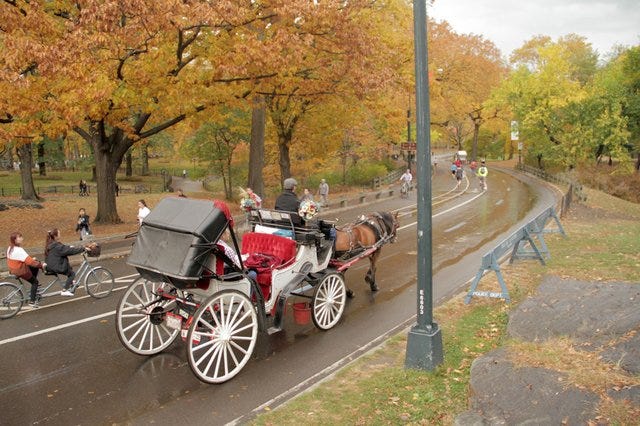
On August 10, 2022, a carriage horse named Ryder collapsed on a Manhattan street, and the disturbing video quickly traveled around the world.
I saw part of it. I couldn’t bring myself to watch the entire thing.
I can’t stand to see animals suffer. I wouldn’t have made a very good veterinarian!
With the controversy surrounding New York City’s carriage horses once again making headlines, the mystery writer in me decided to do a little investigating of my own.
What actually happened to Ryder? And what does his story tell us about the future of the carriage horse?
A Horse Named Ryder
Ryder collapsed near West 45th Street and Ninth Avenue after working on a warm August day.
The temperature was approximately 84 degrees, and much of the initial public discussion centered on whether he had been overheated or overworked.
New York City prohibits carriage horses from working when the temperature reaches 90 degrees Fahrenheit. But there is another provision worth knowing: horses must also stop working when temperatures reach 80 degrees and the equine heat index, which accounts for humidity, reaches 150.
The temperature alone, therefore, doesn’t establish whether Ryder was working within the city’s weather restrictions.
And as the investigation unfolded, it became apparent that there was much more to his story.
What the Veterinarians Found
Ryder survived his collapse and was eventually retired to a farm outside New York City.
An early veterinary assessment identified equine protozoal myeloencephalitis, commonly known as EPM, a neurological disease associated with infection by certain protozoan parasites.
I’ve seen horses affected by EPM, and I know how devastating the neurological symptoms can be.
But subsequent veterinary findings complicated that initial diagnosis.
Ryder was underweight, and questions arose about his age. He had reportedly been represented as a 13-year-old horse, but his identification records established that he was actually 26.
New York City’s regulations prohibit licensing carriage horses older than 26.
Ryder later received treatment at Cornell’s equine hospital. His condition continued to deteriorate, and he was humanely euthanized in October 2022.
A postmortem examination revealed cancer involving multiple organs, with a final diagnosis reported as T-cell leukemia.
During the subsequent criminal trial, a forensic veterinarian testified that Ryder’s illness, poor body condition, heat exposure, and prolonged working day likely contributed to his collapse.
The defense disputed that interpretation, arguing that Ryder had tripped rather than collapsed from overwork.
So what brought Ryder down?
The medical evidence points to a horse with significant underlying health problems, but the precise contribution of each factor remains a matter of interpretation.
What is clear is that Ryder’s condition raised serious questions about his fitness for work.
The Case Goes to Court
In November 2023, carriage driver Ian McKeever was charged with a misdemeanor animal cruelty offense arising from Ryder’s collapse.
The case went to trial in July 2025.
Prosecutors argued that McKeever had continued working Ryder despite visible signs of distress. The defense maintained that Ryder had tripped, that his driver had not knowingly mistreated him, and that his serious underlying illness was not known at the time.
On July 21, 2025, a Manhattan jury found McKeever not guilty.
The verdict resolved the criminal charge against the driver. It did not, however, settle every question surrounding Ryder’s health, care, and the regulations governing carriage horses.
And those questions remain important.
Rules, Responsibility, and the Future of the Carriage Horse
New York City already has regulations intended to protect working carriage horses, including age limits, veterinary examinations, working-hour restrictions, and mandatory rest periods.
Ryder’s case raised questions about whether those safeguards were sufficient and how effectively they were being enforced.
Those who support retaining the carriage trade argue that stronger oversight and enforcement could address problems without eliminating the industry.
Those who favor a ban believe that the risks of operating horse-drawn carriages in modern Manhattan cannot be adequately addressed through regulation alone.
Ryder’s collapse became a rallying point for the latter position.
A proposed bill to end the city’s horse-drawn carriage industry became known as Ryder’s Law.
Following the death of 18-year-old Romanch Mahajan in a Central Park carriage accident in June 2026, the proposed legislation was renamed Romanch’s Law.
That tragedy brought new urgency to an already contentious debate.
And it raises a larger question: can New York City preserve its carriage-horse tradition while ensuring the welfare of the horses and the safety of the public?
My Own Experience in Central Park
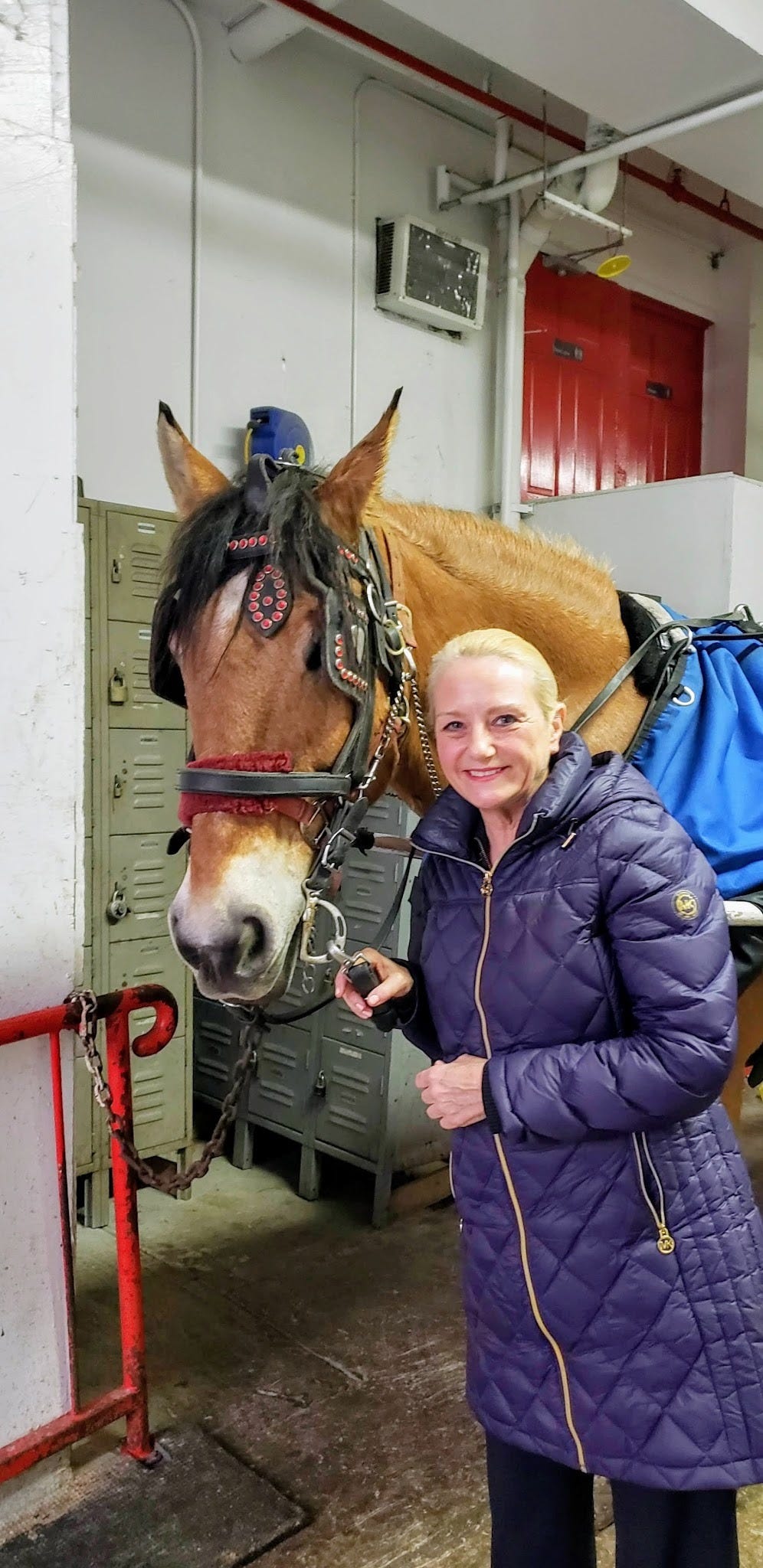
My personal experience with the Central Park carriage trade has given me a perspective that doesn’t always align with those calling for its abolition.
In 2018, while attending the Equus Film and Arts Festival, I had the opportunity to tour the carriage-horse stabling facilities and meet some of the horses and people who worked there.
I found the facilities well run, and the workers I met were enthusiastic about their horses and the jobs they loved.
It was a memorable visit, and one that left me with a favorable impression.
Of course, a visit to one stable cannot tell us everything about an entire industry. Nor does it diminish the seriousness of what happened to Ryder.
But I believe firsthand experience deserves a place in the conversation, alongside veterinary evidence, public records, and the concerns raised by animal welfare advocates.
The question of what should happen to New York City’s carriage horses is not one I think we should approach without examining all of those perspectives.
And there’s considerably more to investigate.
Coming Next: The Last Carriage Ride?
New York’s carriage-horse controversy extends far beyond one horse’s collapse.
In the next installment, we’ll examine Romanch’s Law, the future of the city’s carriage trade, the people and horses whose lives could be affected, and what readers of The Barngoddess Chronicles have to say about it.
-The Barngoddess
About Janet Winters

Janet Winters is the writer and rider behind The Barngoddess Chronicles, where a lifelong passion for horses meets history, travel, culture, country life, and the occasional mystery. An equestrian whose pursuits have taken her from the show ring to the hunting field, she is also the author of the Ivy Snow Mystery Series.
Good conversation, Janet. I, too, have visited the Clinton Park stables. I came away from the experience assured that the horses there are cared for as well as any working horses across the country. I do not understand the tragedy with Romanch being a safety factor in this conversation. How many people are killed by cars in New York City each year? Yet that does not render cars 'too dangerous' to be on the streets.
Thank you for the thoughtful article!