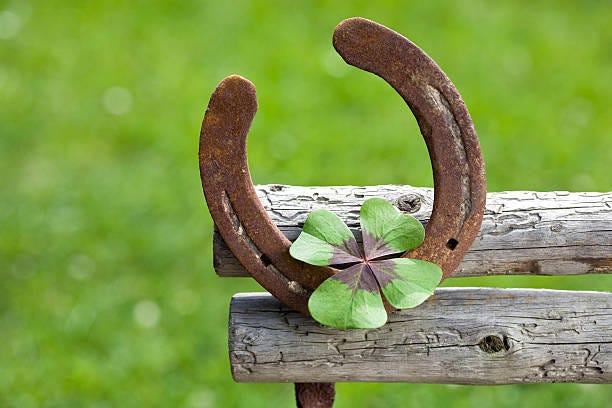
From four-leaf clovers to rabbit’s feet, cultures throughout history have embraced objects believed to bring good fortune. Among these symbols, the horseshoe stands out as one of the most recognizable charms of luck and protection.
March tends to bring the idea of luck to the forefront. With St. Patrick’s Day around the corner and the phrase Luck of the Irish making its annual appearance, it seems like a good time to revisit one of the most enduring symbols of good fortune.
And for those of us who spend our lives around horses, the lucky charm of choice is obvious.
The horseshoe.
But why exactly are horseshoes considered lucky?
The Crescent of the Moon
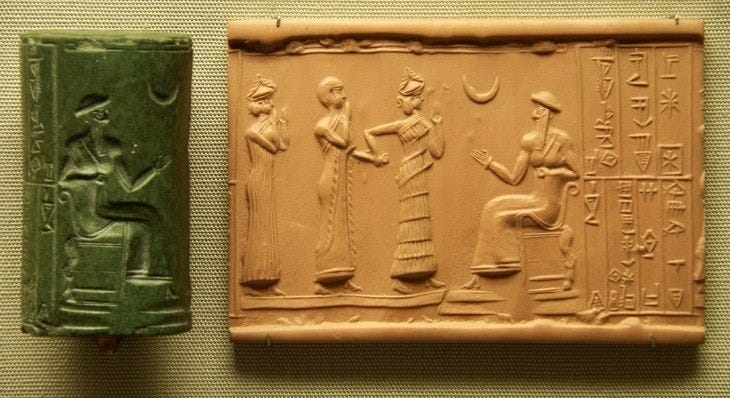
The precise origin of the lucky horseshoe is difficult to pin down, but one early theory traces the belief back to the eighth-century Chaldeans. They associated the crescent shape of the horseshoe with moon goddesses, symbols believed to protect against the evil eye.
The curved shape, therefore, carried a sacred association. Hanging one above a doorway was thought to shield a home from misfortune.
Even today, the orientation of a horseshoe sparks debate. Some believe the open ends should face upward to “hold” the luck, while others prefer them pointing downward so luck can spill into the home.
(I personally keep mine pointing up.)
The Irish Legend of St. Dunstan
Another well-known explanation connects the horseshoe to Irish folklore.
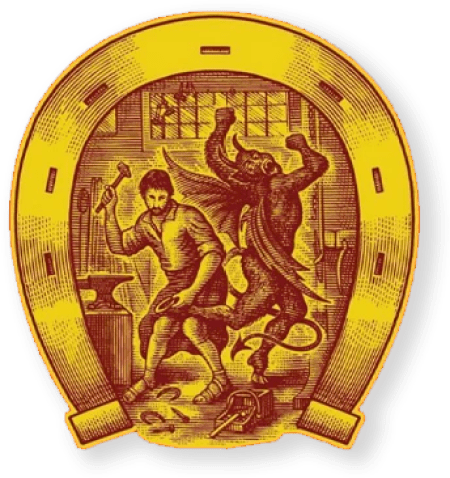
According to legend, a blacksmith named St. Dunstan, who later became the patron saint of blacksmiths, encountered the Devil one day in the year 969.
There are several variations of the story, but they all share a similar moment. When the Devil asked Dunstan to shoe his hoof, the blacksmith agreed, then nailed the shoe on with such force that the Devil howled in pain.
Desperate for relief, the Devil begged Dunstan to remove it.
Dunstan finally agreed, but only after extracting a promise: the Devil would never enter a place where a horseshoe hung over the door.
From that moment forward, the humble iron horseshoe became a symbol believed to ward off evil.
Iron, Fairies, and Medieval Superstitions
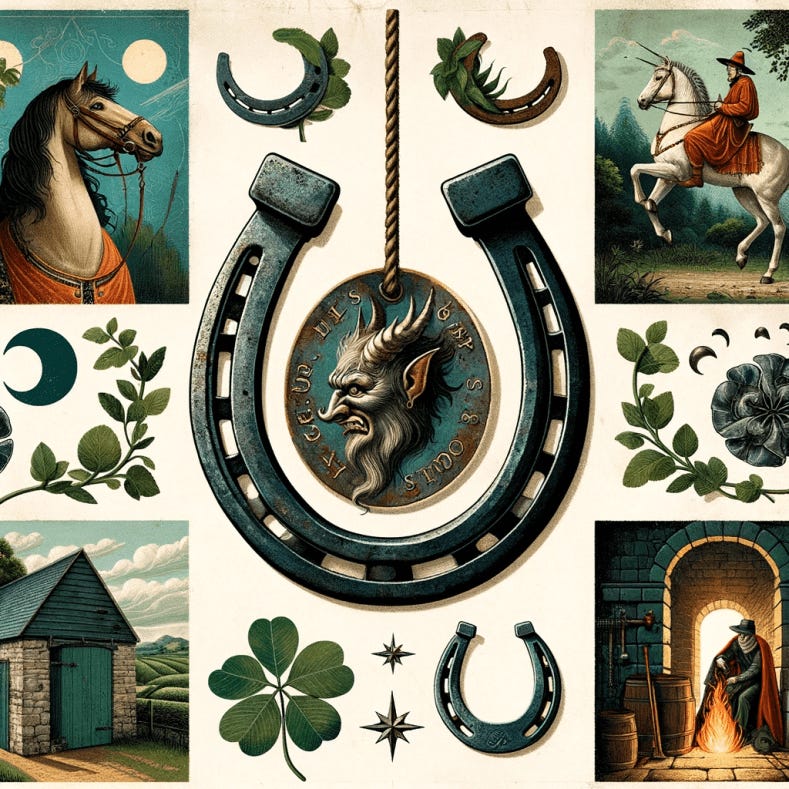
Early Europeans had another reason for trusting horseshoes as protective charms: iron itself.
For centuries, iron was believed to repel evil spirits. Folklore across Western Europe describes mischievous or malicious fairies being unable to cross iron.
Because horseshoes were made from iron, they were believed to carry the same protective power.
The crescent shape reinforced the symbolism. To many early cultures, the moon represented fertility, cycles of nature, and prosperity. Combined with iron’s protective qualities, the horseshoe became a powerful talisman.
During the Middle Ages, when fears of witchcraft spread widely through Europe, the horseshoe gained even more supernatural reputation.
Witches were believed to fear horses and anything associated with them. Just as a crucifix was said to repel vampires, the horseshoe was believed to keep witches away.
The Lucky Number Seven
Traditional horseshoes also carry another symbol of luck: the number seven.
Many horseshoes were made with seven nail holes, and seven has long been considered a naturally fortunate number.
Seven days in a week.
Seven seas.
Seven colors of the rainbow.
And, of course, the seven dwarfs.
7 Types Of Horseshoes
It is a fitting coincidence that when we look at the real horse world, we often talk about several common types of horseshoes that serve very different purposes. Farriers choose a style depending on the horse’s conformation, workload, and the terrain it works on.
Here are seven types you might encounter:
1. Keg Horseshoes

The classic U-shaped steel shoe used for many horses with no special hoof issues.
2. Rim Shoe

A shoe with a deeper groove that provides additional traction, useful in speed events where turning and agility matter.
3. Straight Bar Shoe

Often used to stabilize the hoof when dealing with injury or structural weakness.
4. Egg Bar Shoe
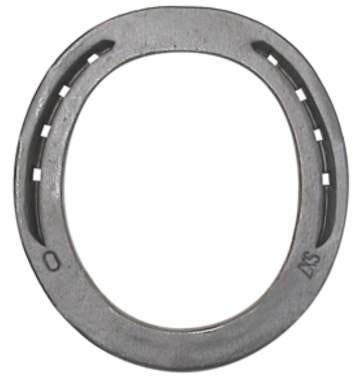
An oval extension that provides additional support to the heel area.
5. Heart Bar Shoe
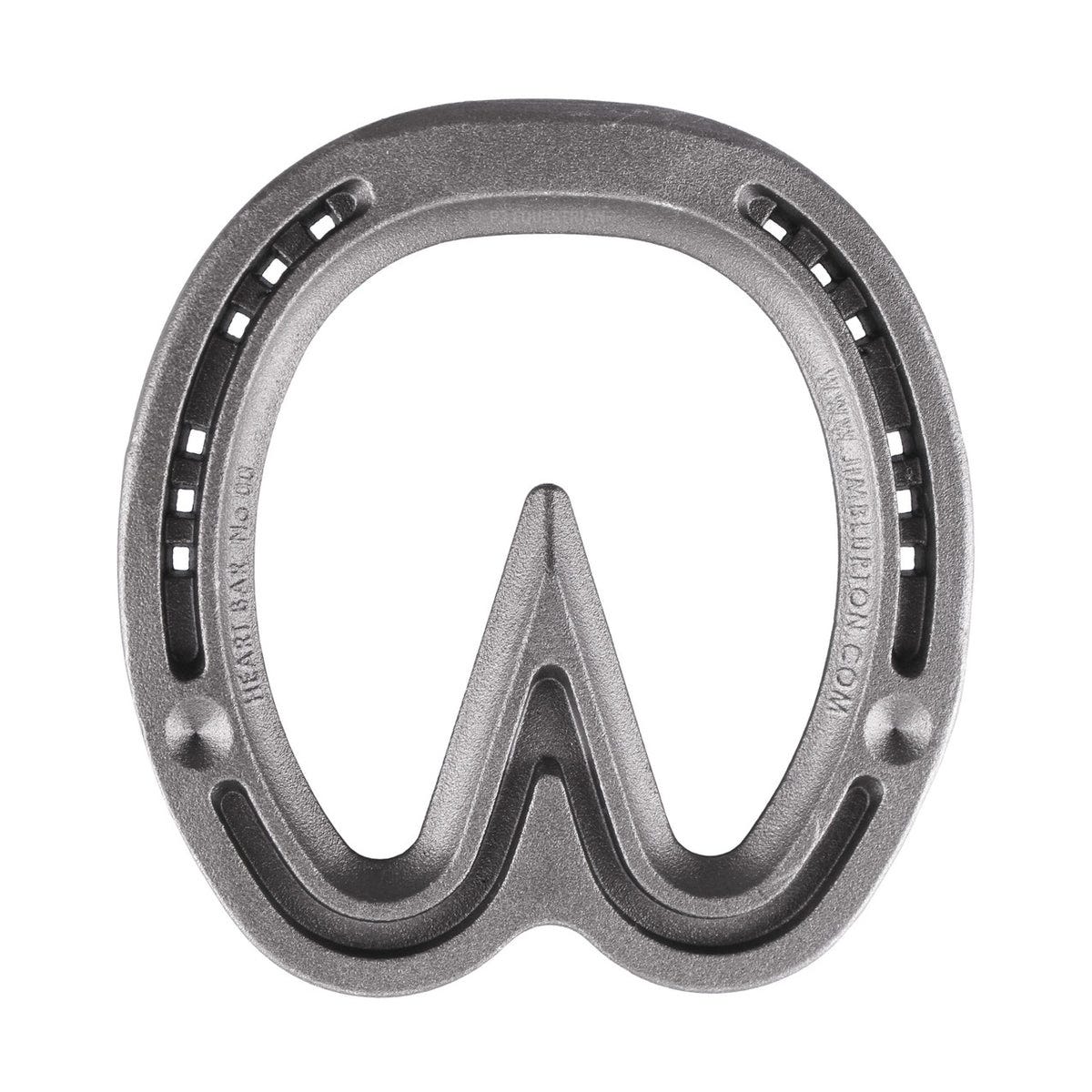
Used for horses suffering from laminitis. It supports the frog, a sensitive structure on the underside of the hoof.
6. Clipped Shoes

Shoes with small tabs that help hold the shoe in place, especially useful for horses that tend to pull shoes off.
7. White Turf Shoes
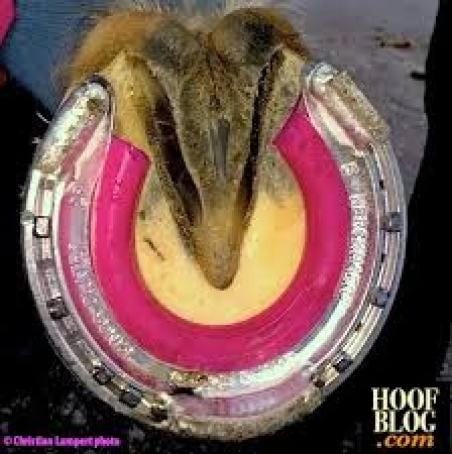
Special shoes used for winter sports such as snow polo, racing, or skijoring. These may include pads or rims designed to prevent snow buildup and improve traction.
(And yes, these are usually temporary, since some of these setups would be illegal on turf tracks.)
So… Are Horseshoes Actually Lucky?
Whether you believe in folklore or not, the horseshoe has certainly earned its place as one of the world’s most recognizable symbols of good fortune.
Part of that might come from the horse itself.
For thousands of years, horses represented strength, survival, and prosperity. A household that owned horses had mobility, power, and opportunity.
Perhaps the lucky horseshoe is really just a reminder of the animal that carried so much of human history forward.
Either way, if hanging one above the door brings a little extra luck into the barn or the house, I am certainly not going to argue with tradition.
To Shoe or Not to Shoe?
Of course, horseshoes are more than folklore. Now that we’ve explored the lore of the lucky horseshoe, the real horse-person question remains:
Should horses wear them at all?
That’s a conversation worth its own post.
And of course…